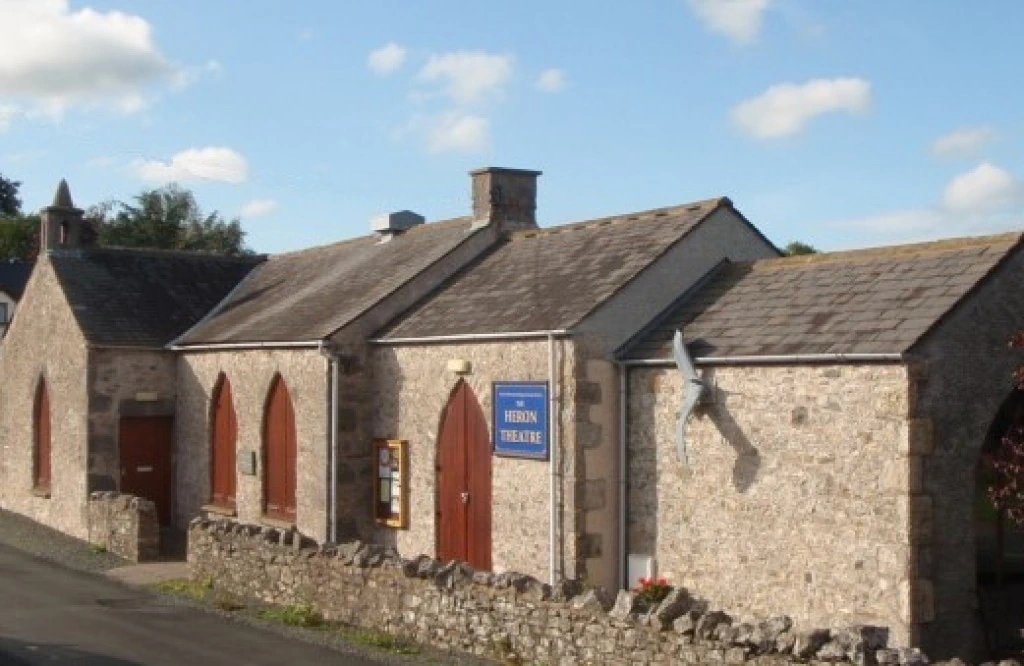
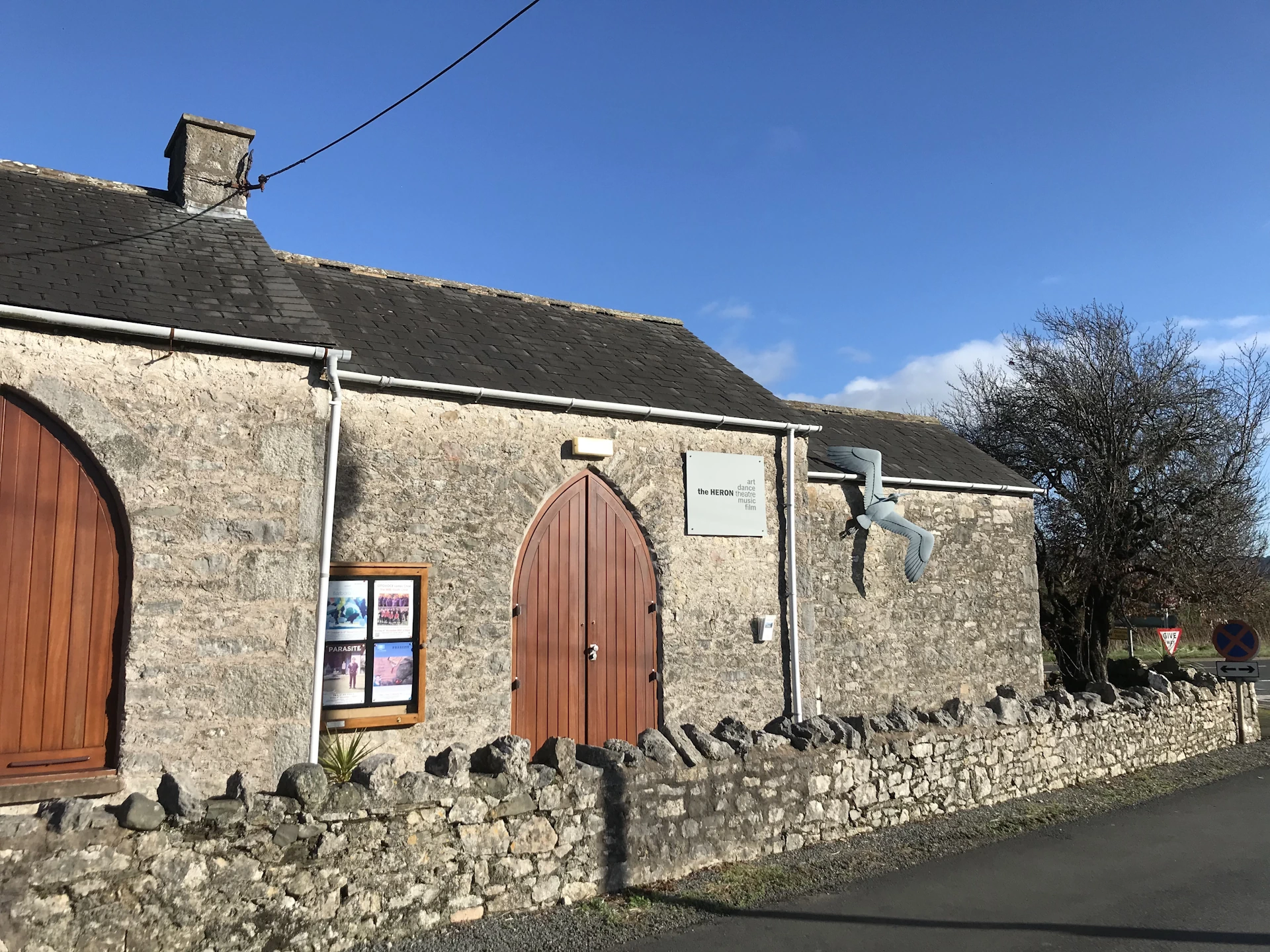
The Heron Theatre stands at the at the junction of Stanley Street and the A6
south of Beetham village and adjacent to Beetham CE Primary School.
It is amazing that even today there are those who visit the theatre for the first time, having passed it many times, who remark that they had not realised that the building was a theatre.
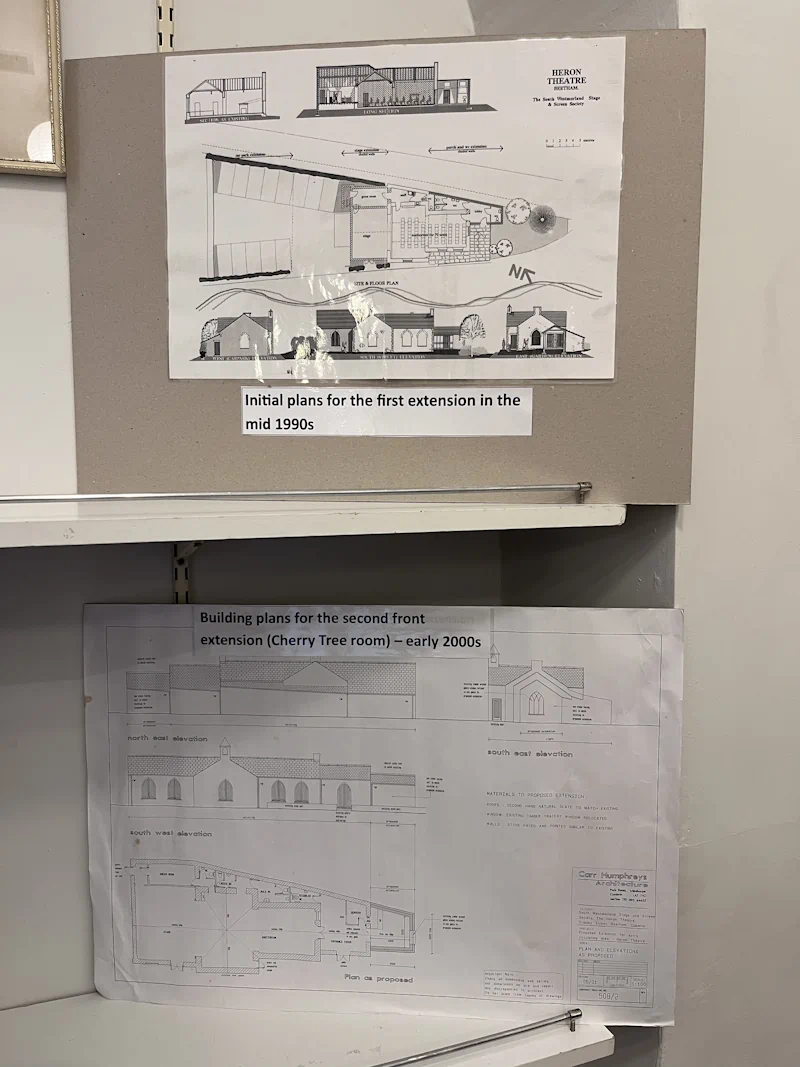
The Heron is a small 77 seat theatre, housed in an extended Grade II listed
building, which was originally an 18th century two room Grammar School.
The original site of the school was on a piece of land called ‘Kirk Hill’ which is in
the centre of the village and is the present site of the village stocks.
The earliest documented reference to any place of education in the village
dates from 1542, when Edmund Pearson left a bequest ‘for adding to the stock
of the parish church, towards the funding of a priest to teach at the free
school and to pray for his soul and all Christian souls”.
The first reference to the existence of a school building in Beetham is found in
The Beetham Repository. It describes the School House as “…a poor building,
but equal to its revenue. It has existed since the year 1610 and was endowed by Subscription of Monies which was laid out in a purchase of Tythe Wool and Lamb.”
An inventory of monies subscribed by parishioners for the building of a school
dated April 25th 1620 comes to £33. At this time the existing building stock of
1610 is valued at £45 3s 0d.
A Community Project
By 1663 the old building had begun to decay. A number of bequests were
made by local parishioners notably Ambrose Leighton a former pupil who was
now Rector of Little Yeldon in Essex. He gave £20 0s 0d. Other bequests included Mr John Johnson of Beetham left £10 0s 0d to be paid annually the Free School of Beetham; Richard Fell of Storth left £20 0s 0d. As a result the school was rebuilt on the Kirk Hill site in in 1665.
An example of the costs of a classical education to a boarder in a humble country grammar school can be found in an account dated 1699:
Greek Grammar 8d
Paper book 2s 6d
Six months boarding fee £2 0s 0d
Total: £4 3s 2d
This included charges for gloves, cravat, hat, shoes, mending, shirts, stockings
and a pair of buckles. School masters were often the local vicar or curate who were well educated. They were badly paid and much of their teaching must have been out of a sense of vocation.
One of the best of them was William Jackson who, as Vicar of Beetham Parish Church, taught at the school for 21 years from 1673 to 1694. He was a farmer’s son who was educated at Pembroke College, Cambridge. He had to love the work as the schoolmaster’s salary was £5 a year!
The 18th Century appears to have been a settled time in the life of the school,
but during the 19 th Century many changes were made.
In 1841 the ‘Old School’ was demolished and rebuilt on a new site at the south end of the village. “The Old School in the Village of Beetham was taken down and a new school was built by John Yeats Thexton Esq at his own expense, near the Turnpike Gate House, and opened on 12th September 1841”.
“In the spring of 1871 in order to meet the requirements of the Elementary Education Act, a new room was built by subscription with sliding doors and the
roof & windows of the old School renewed & new outbuildings made.”
Building Improvements
In 1894 Mr Stephenson, a builder, was engaged by the then vicar of Beetham, Rev. G.H. Cole, to provide an estimate for some improvements to the school which were carried out in 1895.
These improvements included:
“…new floor and roof of corrugated iron with 2 sky leights new sliding door
and door to lavatry also to fitt up lavatry with enameld wash basins to provid
and fix trap of lavatry and to board up the front of the same the boards in front
of cloakroom to be upreight also the end.”
Add to that 5 dozen iron coat hooks on rails, two coats of good oil paint and a
handful of bits of ironmongery and the bill was £19 12s 0d.
The 'New' School
In 1901 the Education Department deemed that The Old School was inadequate for “modern requirements” so the Parishioners of Beetham decided to build a new Church of England school in memory of Queen Victoria.
In 1904 Maurice Bromley-Wilson Esq. of Dallam Tower made the land opposite
the Old School available in perpetuity “for a school for the education of
children and adults or children only of the labouring, manufacturing and other
poorer classes of the Parish of Beetham”.
A new school was subsequently built on the land for the sum of £1,106 15s 9d. The sale of the Old School raised £200 towards this total, other funds coming from subscriptions, grants and loans.
Eventually the Old School and adjacent allotments among other properties
passed into the possession of Mr Charles Nickell of Ashton House. The former
school was used by the community as a reading room, for storage and for
occasional village events.
Creating The Theatre
In the 1930’s and 1940’s locals who enjoyed acting formed The Milnthorpe
Dramatic Society. They performed popular shows to draw audiences.
Within this group there were those, however, with ambitions to produce plays of a higher standard. They were led by Nat Dawson, Head of Heversham Grammar School at the time and were called The Milnthorpe Players.
Eventually in the late 40’s the two groups parted company and South Westmorland Stage & Screen Society (known as SWSASS) was formed as there was also a wish to make films of the productions and on other subjects.
They were joined by school staff and others new to the area.
In the 1950’s Charles Nickell was an active supporter and performer with the newly formed South Westmorland Stage & Screen Society. The society had a club and storage room for rehearsals and occasional performances on the top floor of the former mental hospital at Ackenthwaite (now converted into flats
known as Chelsea Court).
They would stage their productions at Heversham High School. They also created films. One called ‘More than a Match’ was filmed in 1951 around Beetham and Milnthorpe. The Theatre still has an original copy.
The first play to be performed at Heversham School was “Kind Lady”, produced by John Barnes. Subsequently they produced plays twice a year there for three or four nights. The only record available is from the Westmorland Gazette.
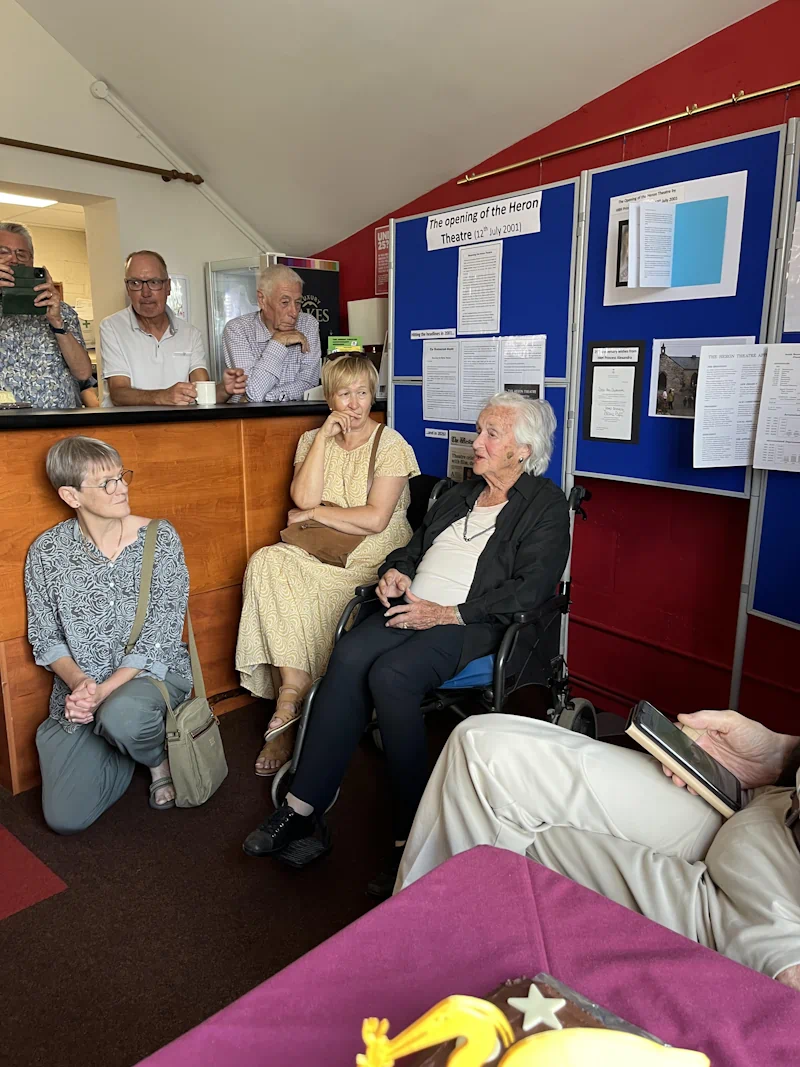
Read about our 25th Anniversary celebrations which documents our history during the past 25 years here.